Sensor Solutions with Edge-AI, anytime & anywhere
At Interactive Wear, we build leading embedded software and hardware platforms for sensor data acquisition and analysis, including Edge-AI for real-time and real-life monitoring. Based on the platforms we develop for customers mobile and wearable multi-sensor systems for body monitoring, motion tracking, and IoT applications.
In data science projects, we collaborate with our customers and partners to generate new meaningful data insights and metrics. For data collection and analysis projects, we provide ready-to-use systems.
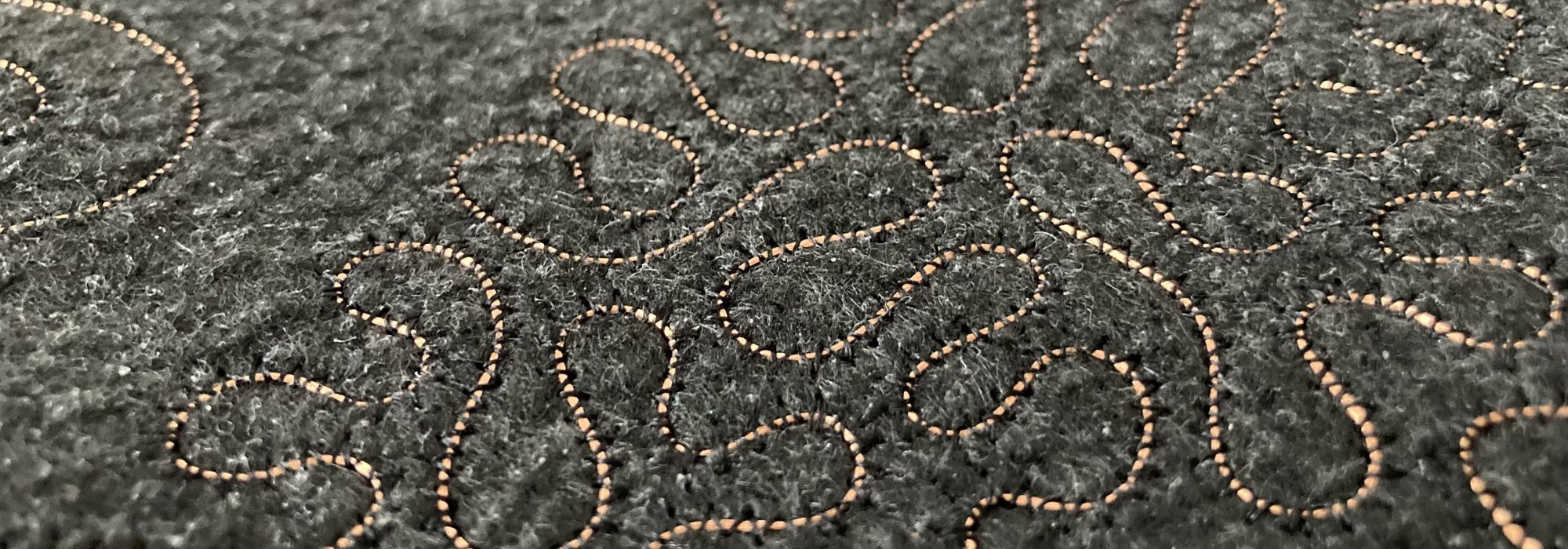
Our experience and offerings in smart textiles and wearable technologies enable us to support customers in digitizing, interconnecting, and innovating their products in various segments, including sports, fitness, rehabilitation, fashion, workwear, and smart PPE. Our components and systems are part of more than 200 products in the market.

Data Science Projects
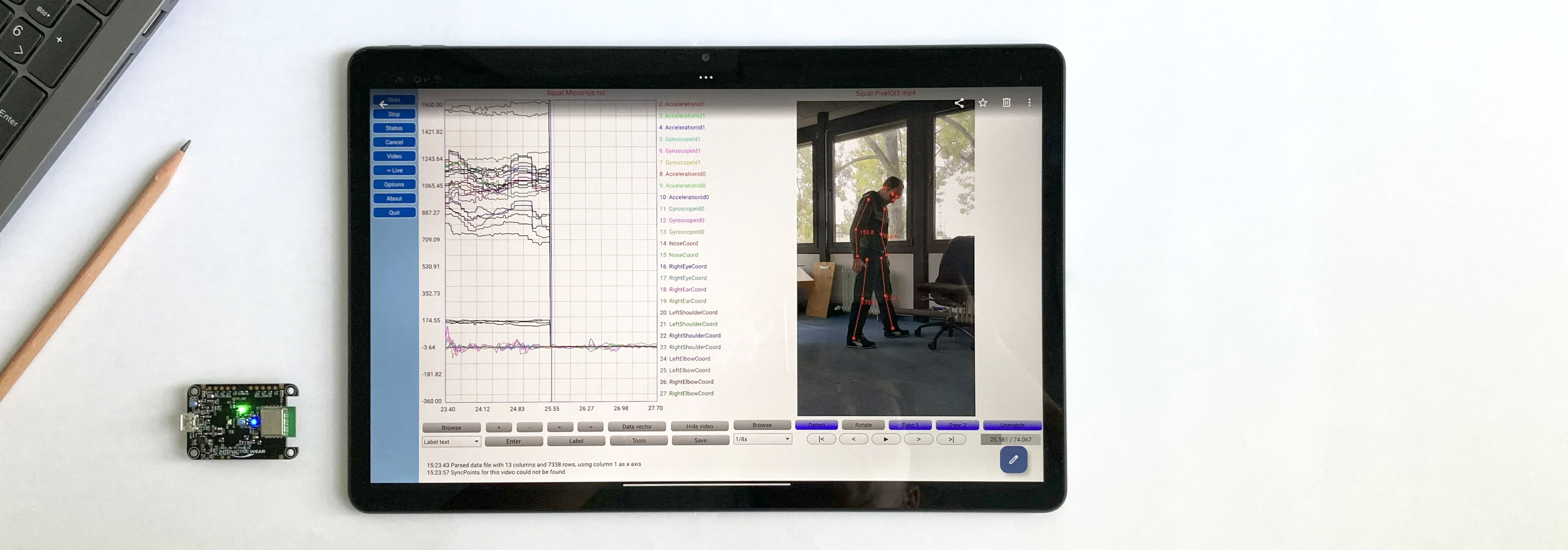
We support our customer to setup and execute data science projects focused on body and environmental data. We provide methods and tools to acquire and analyse sensor data in real-life environments, anytime and anywhere without any additional infrastructure.
We offer preconfigured systems ready-to-use, where our AI experts and data scientists work closely with our customers on data acquisition and analysis by diving deep into domain specific data processing and labelling challenges.
Customers can benefit from our algorithm know-how and libraries especially in activity recognition, gait analysis, vibration analysis, and cognitive load prediction.
We offer a cooperative and open approach, where our systems can integrate sensor data from other sources and customers can easily integrate our sensor data, including raw data, into their applications.

Product Development
We develop customer specific wearable products from idea to manufacturing, delivering systems for demonstrators, prototypes, pre-series and volume production. We explore newest sensors and technologies like neuromorphic computing to decrease power consumption of multi-sensor systems. Customers take advantage from our existing platforms, enabling fast time to market combined with reduced development risks.
We generate highly efficient neural networks prepared to run monitoring applications on edge-AI devices with strongly limited resources.

CONSULTING & ENGINEERING
We provide a fast access to the basics and principles of wearable electronics.
We help to evaluate product concepts or developed components, leveraging our development know-how and industrialization experience from more than 200 projects as well as our R&D partner network for electronics and smart textiles.

COMPONENTS & SYSTEMS
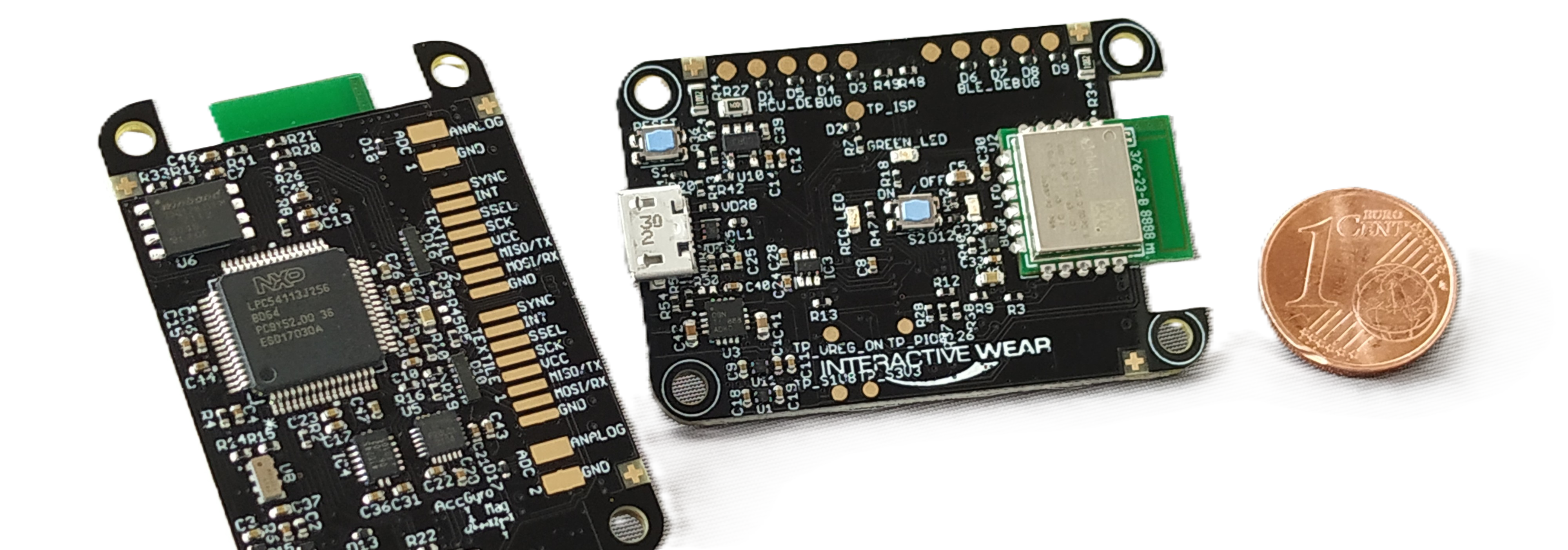
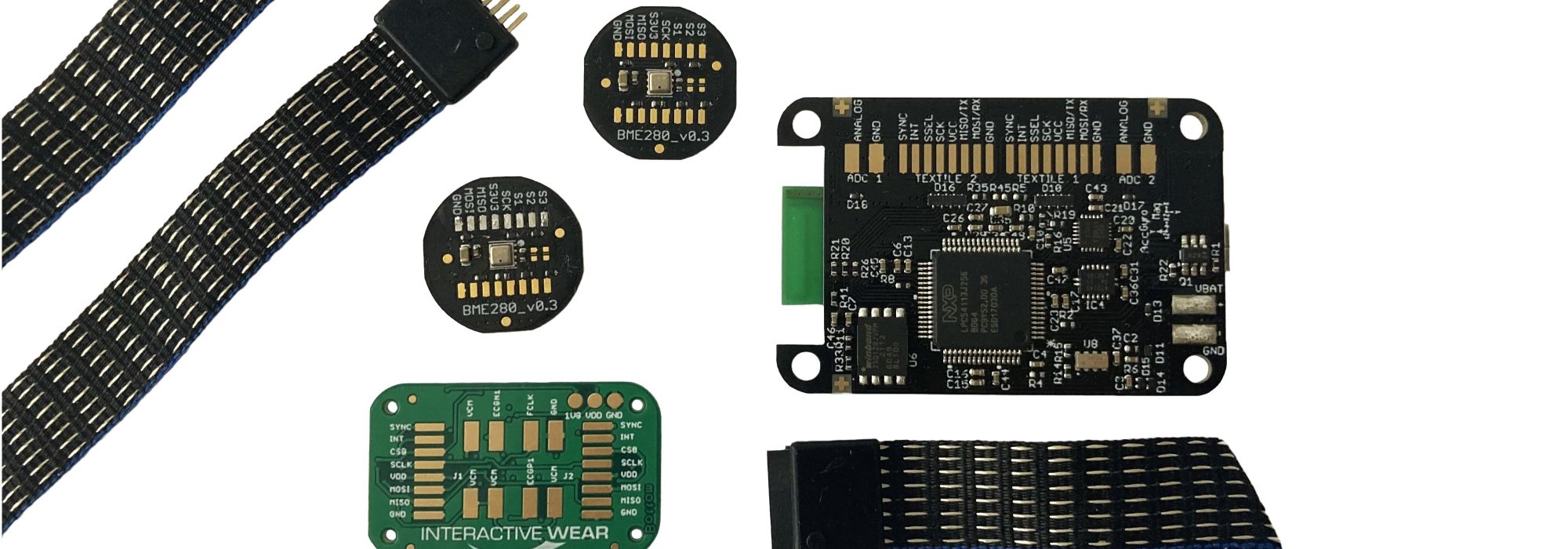
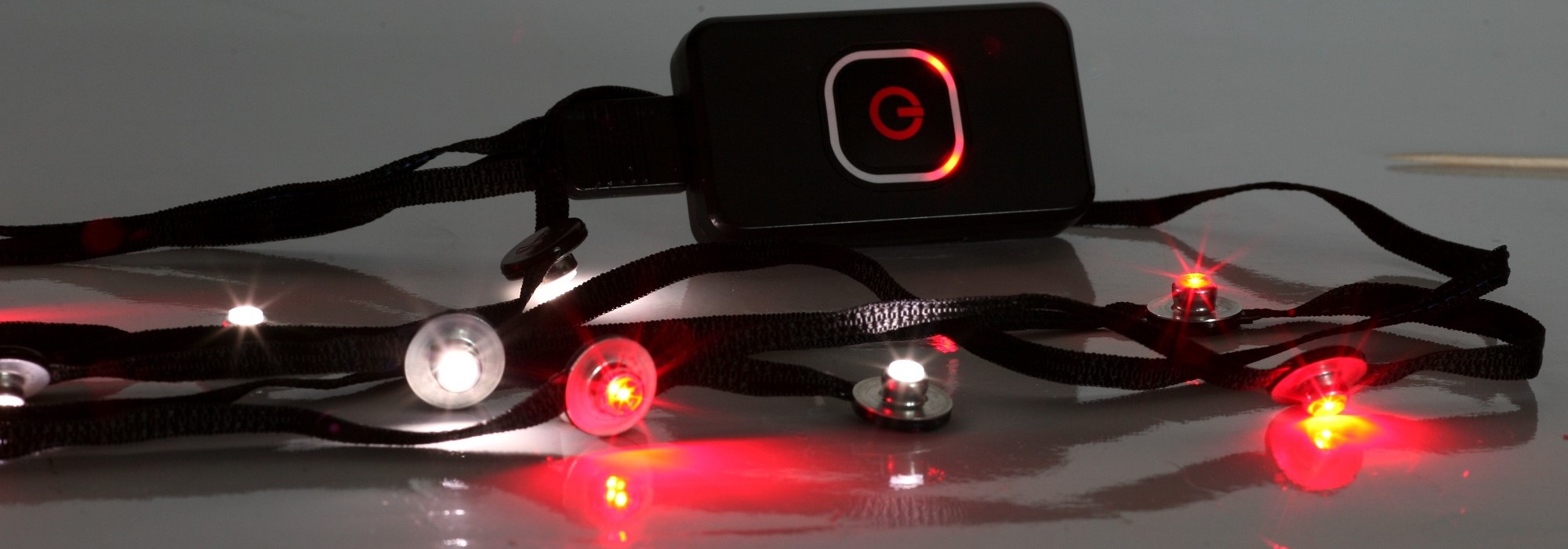
We offer components and systems to build edge AI sensor applications, wearable products and smart textile solutions. The MicroHub portfolio MHX ranges from single sensor systems like MHX Motion One, to MHX Fusion systems.
Wireless communication is done via BLE, NFC or NFMI. The platform is complemented a variety of MEMS and analogue sensors, and textile cables for power and data transfer.

OPED Orthelligent
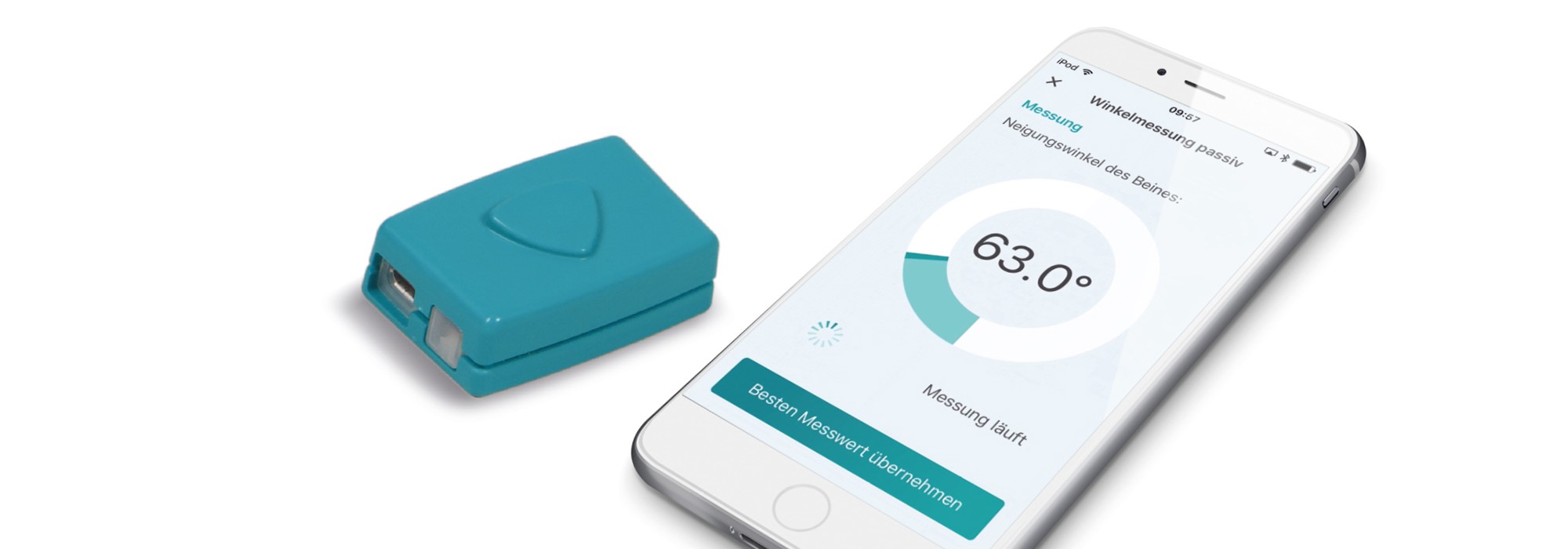
A motion sensor unit mounted on the lower leg, combined with a training app, enables patient and therapist to optimize and speed up the rehabilitation process.
Development system: MHX

Heated mattress for patient transport
A powerful mobile heating electronics combined with sensor controlled heating pads is the core technology for PAX-Bags innovative product Stretcher Mattress - TMS
Development system: H60

Sensor fusion & real-time feedback
Feraru Dynamics has developed a system to provide real-time alerts based on vibration perceived by user’s hand, preventing overexposure and driving the formation of robust control measures.
Development system: MHX
24
february
2023
Ergonomic assistance systems for grid control centers in critical infrastructures
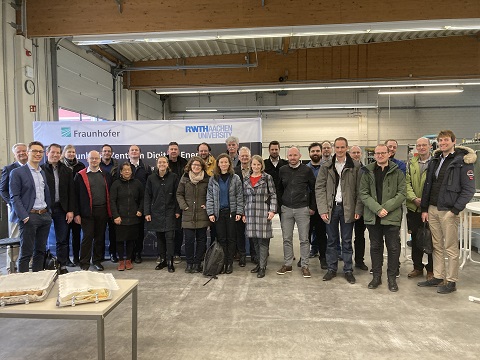
Project Kickoff BEAUTIFUL, Aachen, 23./24.02.2023
The increasing technological and systemic complexity of energy systems and the increased risk of cyberattacks lead to a significant increase in relevant process information that needs to be considered by the control center operators. The BMBF-funded BEAUTIFUL project aims to optimise the working conditions of the operators in critical infrastructures by developing innovative assistance systems to support fast and safe decisions in complex situations.
Interactive Wear will implement distributed wearable sensors and sensor fusion algorithms to measure physiological data of the operators to determine the stress level and mental fatigue.
20
january
2022
Interactive Wear adds NFMI communication to its technology portfolio
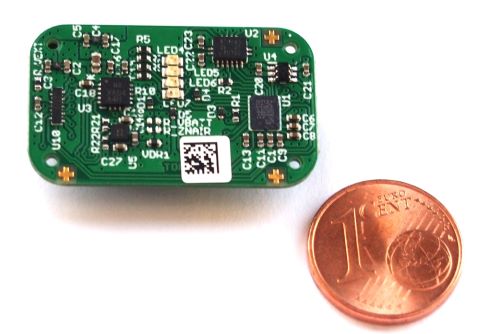
Adding NFMI (near field magnetic induction) technology enables Interactive Wear to support customers in new areas of BSN (Body Sensor Networks) and IoT applications, where conventional RF technologies have their limitations.
In the recently completed BIONIC project for posture and fatigue analysis in industrial and construction work environment, Interactive Wear realized a near field magnetic induction (NFMI) communication node to connect a head-worn sensor with a textile wired BSN. NFMI was chosen to provide stable, private and low energy communication in industrial and construction environments. The systems were successfully tested at Rolls Royce Power Systems in Friedrichshafen, Germany.
NFMI is well suited for low power wireless communication where Bluetooth has its limitations, especially for communication through the body, in shoe-soles or under water.
The NFMI technology has several benefits compared to conventional RF technology.
- It does not interfere with Bluetooth and Wi-Fi
- It is private because of the very limited range of transmission
- It works under water, as water does not absorb the magnetic field
- It is power efficient as NFMI devices last up to five times longer than comparable Bluetooth devices
- It is multi-point and real-time capable, designed to connect many devices
Interactive Wear’s BSN is a modular wired/wireless multi-sensor system that enables a wide range of applications through sensor fusion using motion analysis, climate and vital parameters. The system can integrate sensor data from smart phones and smart watches, as well as customized third-party sensor data. New insights can be generated through neural network capabilities, e.g., detecting new patterns and events for monitoring applications. Communication via textile cable and wireless via Bluetooth LE has been extended by an additional technology NFMI.
Customers can be supported in developing NFMI applications via prototyping workshops, feasibility studies, and custom specific development projects.
28
oktober
2021

Invisible Motion Tracking at Work – BIONIC Pilots Started
Sensor technology and AI for smart workwear to provide healthy and secure work conditions
Two pilots have been launched in the BIONIC research project. After a preliminary trial in July, the motion tracking systems are being put into test mode at Rolls Royce Power Systems in Friedrichshafen in October 2021. Last week, they have also been introduced at construction sites of Acciona in Spain. AI is used to evaluate the collected data in real time to facilitate detection of poor posture while working. Countermeasures can thus be taken at an early stage.
BIONIC stands for personalized body sensor networks with built-in intelligence for real-time risk assessment and coaching of workers, in all types of working and living environments. BIONIC systems are inconspicuously integrated into the usual work clothing and can monitor movements at the workplace during an entire shift. In case of unfavorable or health-endangering movements, the worker receives feedback. The systems can also be used during training and exercises.
Interactive Wear led the development of a modular and scalable sensor network to acquire and synchronize sensor data from distributed wearable sensors. Lightweight and robust textile cable were used for interconnection and invisible integration into work wear. Additionally, Interactive Wear has developed several economic variants with 2-4 sensors suitable for daily monitoring with a different application focus.
The concept of distributed sensor systems has already been successfully implemented in several projects. The UK based company Feraru Dynamics, for example, integrated a vibration-sensing system into a glove. This enables employees, who are exposed to (mechanical) vibration, to protect from such injuries as hand-arm vibration syndrome (HAVS).
The systems can be used in multiple ways:
- For recording, analysis, and optimization of movements at a specific workplace. In this case, the systems consist of several motion and physiological sensors, usually 6-12, integrated in the typical work clothing.
- These systems could be also used for training programs with specific exercises.
- As a monitoring device for workers at the workplace, to measure the load over time from certain motions with high stress impact. For this purpose, systems with usually 2-4 sensors, are used.